Okay, so
maybe I went a little over the top here. This takes some serious time and money
investment – I split the work over two days, doing the just, duck meat and
cracklings on day one. Day two was making the ravioli and fillings, and the
extra mushrooms/chard for the plate. Once all the crazy prep is done, this is
actually quick and easy to cook, as long as you have your mise all set and plan
out what need to be cooked when in your head. I got 13 ravioli – 4 was a
sizable serving, because these were some jumbo ravioli. Duck just is probably
enough for twice that, I froze the extra. Adjust other ingredients accordingly
if you’re trying to scale this.
Duck Jus:
Duck carcass
(see below for details)
1 onion,
diced
3 medium
carrots, diced
3 stalks
celery, diced
1 bay leaf
A few sprigs
of thyme
Black
peppercorns
3
tablespoons tomato paste
3 cups red
wine
7 cups
chicken stock
2 teaspoons
duck fat
The easiest
way to do all this might be to roast the whole duck and divide it up
afterwards; I thought I would just need to use 2 legs to get the meat for the
ravioli filling, but in the end I used two breasts and one leg; Do whatever you
need to do, but here’s the way I ended up going about this:
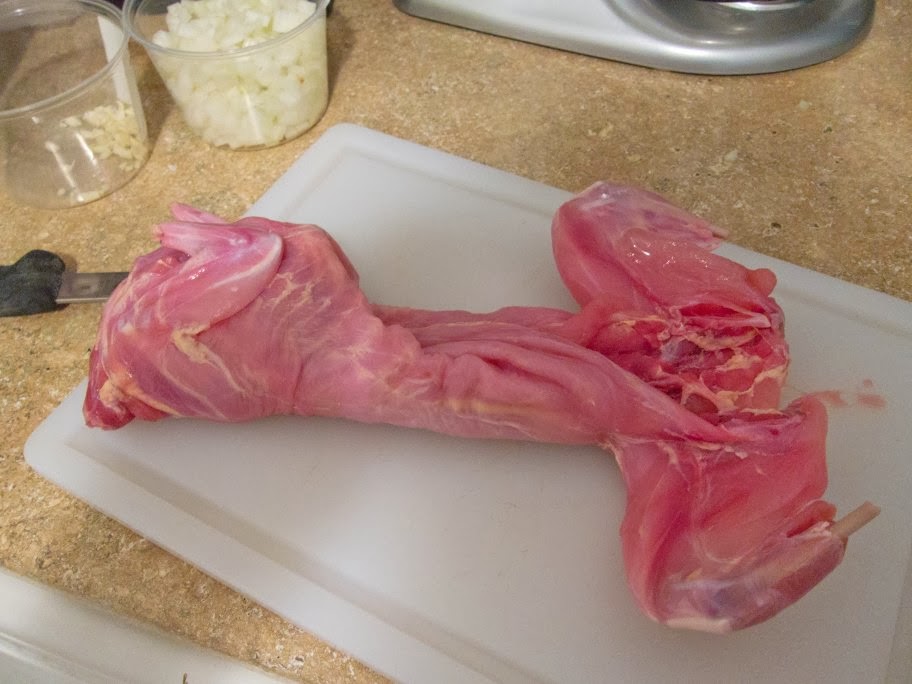
Remove the
wings, legs, and breasts from the duck. Set aside the legs and breasts. Remove
any remaining skin from the carcass – we’re reserving this for fat rendering
and cracklings.
Place the
remainder of the duck carcass on a baking tray along with the wings and the
duck neck. Roast at 400°F for about 40 minutes, until everything has some nice
color on it. Flip about halfway through.
Drain and
save any fat on the pan. Cut the carcass into chunks and set aside along with
the neck and wings.
In a
stockpot over medium heat, add two teaspoons of duck fat and the
onions/carrots/celery. Cook for 5 minutes until softened, then add the tomato
paste and cook for a few more minutes, allowing the paste to start to
caramelize. Add in the wine and reduce until it reaches a syrupy consistency.
Add in the
chicken stock, reserved duck bones, thyme, bay leaf and peppercorns. The liquid
should be covering everything – if not add water until it does.
Simmer for 4
to 5 hours, then strain through a cheesecloth into a smaller pot. Discard the
solids, and place the sauce back on a simmer and reduce until you have 3 to 4
cups of jus.
Cracklings:
Take the
excess skin you removed from the duck and place it in a cold pan. Set the heat
to low, and allow all the fat to render out, occasionally draining the fat
through a strainer and saving it – this stuff is liquid gold so we’re keeping
as much of it as possible.
Eventually
all the fat will render, and the skin will start to brown. This could take in
the neighborhood of 45 minutes depending on the heat in the pan, but that’s not
set in stone. Once the skin is nice and brown, remove it from the pan. Chop
into bite sized pieces.
Duck
meat:
2 duck
breasts
1 duck leg
Again, maybe
not the optimum way to do this, but this is what I ended up doing. For the leg,
roast at 400°F until it hits an internal temp of 165°F. For the breasts, place
in a pan on medium heat, skin side down. Allow the fat to render until the skin
starts to brown. Turn up the heat and get a nice color on the skin side. Flip,
and cook briefly on the meat side, about a minute or two. Breasts should take
20 minutes to cook.
Remove the
meat from the breasts and leg, and chop finely for ravioli filling.
Ravioli
filling:
Reserved
duck meat
½ pound
crimini mushrooms, roughly choped
4 small
shallots
1 tablespoon
fresh thyme, chopped
Salt and
pepper
In a pan
over medium heat, add some duck fat and the chopped mushrooms. Season with salt
and cook for 4 minutes. Add the shallots and cook for an additional 2 or 3
minutes. Dump mushrooms and shallots in a bowl along with reserved duck meat,
thyme, and some salt and pepper as needed.
Pasta
dough:
9 ounces
flour
6 ounces
eggs (3 large eggs)
1 egg white
and 1 tablespoon water for egg wash
I add the
flour in a large bowl and weigh it out, then form a well in the middle and add
eggs. If your eggs don’t quite weight 6 ounces, add a little water to make up
the difference. Beat the eggs, slowly incorporating in the flour.
Once all the
flour gets incorporated, turn the dough out onto a lightly floured surface and
knead for 7 minutes. The dough should have a velvety texture. Spritz a piece of
saran wrap with cooking spray and place the dough ball on top. Hit the dough
with an additional spritz of cooking spray and wrap with the plastic.
Refrigerate for at least 30 minutes.
Use a pasta
machine to roll the dough out in two sheets. Spoon the filling onto one pasta
sheet – I used about 1.5 tablespoons per ravioli? They ended up pretty big – I ended
up with 13 all together.
Once the
filling is spooned onto a pasta, make an egg wash by combining 1 egg white with
1 tablespoon water. Brush the egg wash around the each mound of filling. Take
the second pasta sheet, and place it over the filling. Press the pasta
together, removing air pockets as you go, and sealing the raviolis. Use a pizza
cutter to separate and trim excess.
For the
third sheet, place filling on one half, hit it with the egg wash and then fold
over and seal.
If you’re
making these ahead of time, place raviolis on a baking sheet lined with
parchment paper and lightly floured and stick in the freezer. Once frozen,
place into a Ziploc bag.
Bringing
it all together:
Duck Jus
Cracklings
Handful of
small crimini muchrooms (or quarter larger ones)
Olive oil
Swiss chard
Duck
raviolis
Foie Gras
slices (mine came pre sliced, if you have a whole lobe you’ll have to look
elsewhere on how to prep it)
Place the
mushrooms and a small baking dish and toss with olive oil and salt. Roast in a
400°F oven for 20 minutes. Assuming you made the cracklings and duck jus ahead
of time like I did, warm them up in the oven with a few minutes remaining.
For the
swiss chard, wash and chop roughly. Add some oil in a pan over medium and saute
for 3 to 4 minutes, until wilted, tossing some salt on for good measure.
For the
ravioli, bring a pot of well salted water to a boil. Boil the ravioli for 3
minutes (5 if frozen).
For the
foie, score on one side with a knife (optional, strictly for presentation
purposes – my score marks didn’t turn out super fantastic, but oh well). Salt
liberally. Heat a cast iron or other sturdy pan on high – get it really hot now
– and sear the foie gras for 30 seconds per side. That’s it, seriously foie
gras is that easy to cook (if it comes sliced for you).
Place the
chard and raviolis on the plate. Pour over duck jus. Top with roasted mushrooms
and cracklings. Place seared foie gras on everything and dig in, because you’ve
earned it.